Guide
Washing, drying and storing knits so they keep their shape
The four things that ruin a sweater, in the order they happen, and the routine that avoids all of them in about four minutes a week.

A knit is a fabric made of loops, and every problem it will ever have comes from that. Loops slide against each other, so the fabric stretches. Loops trap air, so the fabric felts when heat and agitation push the fibres together. Loops catch, so the fabric snags. And loops let a raised fibre escape, so the surface pills.
Nothing in that list is a defect. It is the price of a fabric that stretches to fit you and traps warm air while it does it. What follows is how to keep each of the four from happening faster than it has to.
Start with what the label is required to say
Care labels are not advice. They are a legal disclosure written to a federal rule, and the rule sets out both what must appear and what the words mean. Washing first:
The label must state whether the product should be washed by hand or machine.
Federal Trade Commission, 16 CFR Part 423, Care Labeling of Textile Wearing Apparel
Then the temperature, which is where knits are lost:
Machine wash means hot, warm or cold water can be used.
Federal Trade Commission, 16 CFR Part 423, Care Labeling of Textile Wearing Apparel
So machine wash on its own permits hot water. Machine wash cold is a narrower instruction and, on a knit, an important one. Heat is what turns a wool blend into a felted board and what takes the recovery out of an elastic rib.
Where the maker states a care instruction, it appears on the product page here in the maker's own words. The counts across this range are below.
| Care as stated | Styles |
|---|---|
| Hand Wash | 92 |
| Machine Wash | 32 |
| Machine Washable | 14 |
| Hand Washable | 1 |
The wash itself
Cold water, a short cycle, and the garment turned inside out. That covers almost everything in this range, and each part of it does a specific job.
Cold protects the fibre. Acrylic softens and deforms with heat, wool felts with it, and dye lifts from a saturated colour in hot water in a way it never does in cold. A modern detergent is formulated to work at fifteen or twenty degrees, so cold is not a compromise any more.
A short cycle protects the structure. Agitation is what pushes fibres into each other and what rubs surfaces into pills. Half an hour of tumbling does most of the damage a knit sees in its life, and a fifteen-minute cycle does noticeably less.
- 1. Cool water, no soakingKnitwear gives up its shape in warm water. Ten minutes is plenty, and wool wash beats detergent.
- 2. Press, never wring, dry flatWater weight is what stretches a knit. A towel takes it out, and a hanger makes it longer.
- 3. Fold, never hang, between seasonsFolded in a box a knit keeps its shoulders. On a hanger it grows two sizes by spring.
Inside out protects the face. The outside of a sweater is the part you look at. Putting it against the drum, against zips and against denim is how it becomes fuzzy at the elbows first.
Two additions worth the effort. A mesh bag for anything with an open stitch, because crochet catches on everything including itself. And a load of like with like: knits with knits, not knits with towels, whose lint ends up in your loops and never entirely leaves.
Pullovers, most rated first
See all
Wash by the stitch, not by the garment
A cardigan and a pullover in the same yarn want the same wash. Two cardigans in different stitches do not. The stitch decides how much water the fabric holds, how much it moves while it is wet, and how easily the surface rubs. The useful question is which knit you are holding.
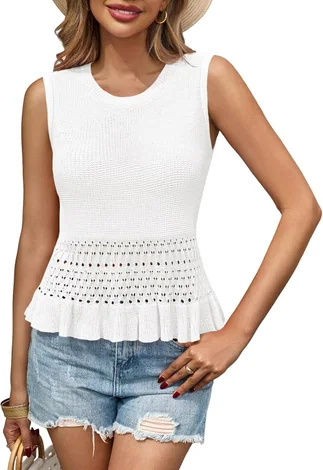
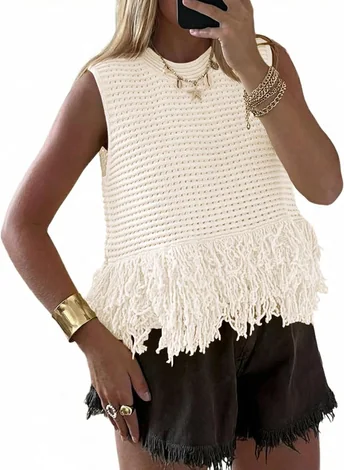
Chunky knit holds the most water and carries the most weight when it is wet. It is the one that has to be pressed in a towel and dried flat, and the one that pulls itself out of shape fastest on a hanger. Crochet and the other open stitches hold almost no water and dry in an hour, but they catch on everything inside a drum, so they go in a mesh bag or they go in the basin.
Hand Wash92 pieces
Machine Wash32 pieces
Machine Washable14 pieces
Hand Washable1 pieces
Ribbed knits forgive the most. They compress, they recover, and they come out of a short cold cycle looking the way they went in. Cable knit sits between the two, because the raised rows hold water and the garment needs turning halfway through drying. Fuzzy knits shed for their first two washes, so the first one is done alone. Fair Isle carries more than one yarn at a time, and if one of those yarns is wool then the whole piece follows the wool rule.
Our knit guide lists what each stitch does on the body, and every product page names the stitch in the maker's own word, so the wash decision is already on the page you bought from.
Hand wash means hand wash
- cool water, ten minutes, wool wash
- press the water out in a towel
- dry flat, away from a radiator
Machine wash still has rules
- cold, delicate cycle, inside a bag
- spin low or the shoulders stretch
- flat to dry whatever the machine promises
Hard water, and why the same routine gives different results
Two people can follow the same instructions and get different sweaters. Water is usually the reason. Hard water carries dissolved calcium and magnesium, those minerals bind to detergent before the detergent reaches the fibre, and what is left sits in the loops as a fine deposit.
The symptoms are recognisable. A dark knit that goes chalky after a season. A soft yarn that feels scratchy out of the machine. A detergent that seems to have stopped working at the dose it always used.
The fix is not more detergent. More detergent in hard water leaves more residue, not less. A rinse with a cup of white vinegar in the water dissolves the deposit and leaves no smell once the garment is dry. Where the water is very hard, a water softener in the wash does more for a knit than any change of detergent.
| Stitch | Styles | In cardigans | In pullovers |
|---|---|---|---|
| Chunky knit | 28 | 15 | 12 |
| Crochet | 27 | 5 | |
| Ribbed | 15 | 2 | |
| Cable knit | 14 | 2 | 6 |
| Fuzzy knit | 5 | 1 | 1 |
| Fair Isle | 4 | 1 | 2 |
When hand washing is worth it
Hand washing is not a superstition, but it is not always necessary either. It matters for three things in this range: pieces with a lot of viscose, pieces with a fuzzy or brushed surface, and anything with a trim that is glued rather than sewn.
The method takes four minutes. Fill a basin with cool water, add a capful of detergent, submerge the garment and press it gently under the surface twenty times. Leave it ten minutes. Drain, press the water out against the side of the basin, and refill to rinse. Press again.
What you never do is the thing everybody's instinct suggests:
Do not wring” —do not use roller wringer, nor wring by hand
Federal Trade Commission, 16 CFR Part 423, Care Labeling of Textile Wearing Apparel
Wringing twists loops past their limit and the fabric keeps the twist. To get water out, lay the garment on a towel, roll the towel with the garment inside it, and press down along the roll. The towel takes most of the water in about thirty seconds and nothing has been stretched.
Drying is where sweaters die
More knits are ruined by drying than by washing, and it usually happens on a hanger. A wet sweater is heavy. Hung by the shoulders, it stretches downwards for hours and comes out longer in the body and the sleeves. The rule has a phrase for the alternative:
Dry flat” —lay out horizontally for drying
Federal Trade Commission, 16 CFR Part 423, Care Labeling of Textile Wearing Apparel
Flat means on a towel, on a rack, on a table, anywhere the weight is supported along its whole length. While the garment is damp, push it gently back into shape: square the shoulders, straighten the sleeves alongside the body, pat the hem into a line. A knit dries into whatever shape you leave it in, which is a threat and a repair at the same time.
Turn it once halfway through. A thick knit dries top-side first and stays damp underneath for hours, and damp wool-blend yarn left folded overnight smells like damp wool-blend yarn for a week.
A tumble dryer on low is survivable for a plain acrylic knit and unwise for everything else. If you use one, take the garment out damp and finish it flat. The last ten minutes of a dryer cycle is where shrinkage and pilling happen together.
Bringing a stretched knit back
A sweater that has grown is not always finished. Elastic recovery is partly mechanical, and a wash-and-reshape cycle recovers a surprising amount of it.
- Wash cool and gently, by hand or on a short machine cycle. The point is to relax the fibres, not to clean the garment.
- Roll in a towel and press the water out. Do not wring.
- Lay it flat and measure. Push the body in from the sides and the sleeves up from the cuff, in small movements, until it matches a garment that fits.
- Leave it alone until dry. Moving a damp knit undoes the reshaping you just did.
This works well on acrylic and acrylic blends, which is most of this range, and less well on cotton, which has no memory to recover. It does not work at all on a garment that has felted, because felting is fibres locked together rather than loops out of place, and that is permanent.
Pills and snags: two different problems
A pill is loose fibre tangled on the surface. A snag is a single loop pulled out of the fabric. They look similar from a distance and they need opposite treatments.
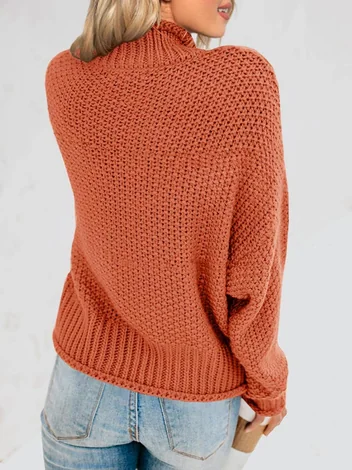 Pullovers57 styles
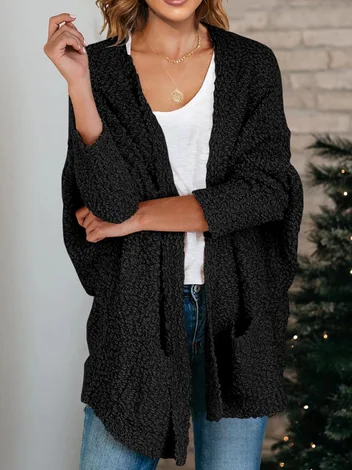 Cardigans47 styles
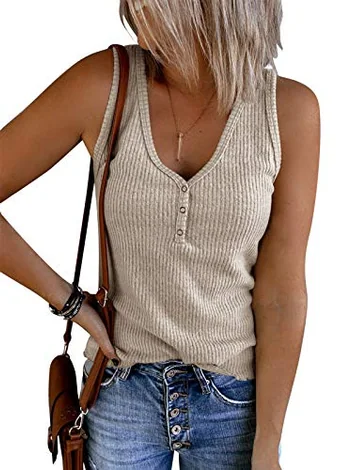 Tops & Vests44 styles
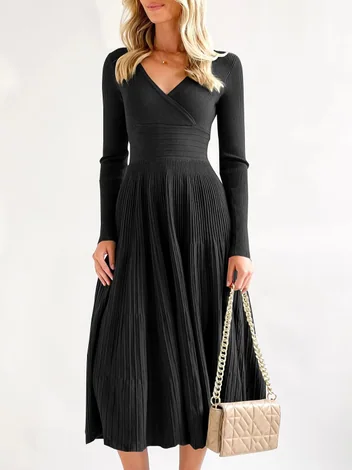 Dresses17 styles
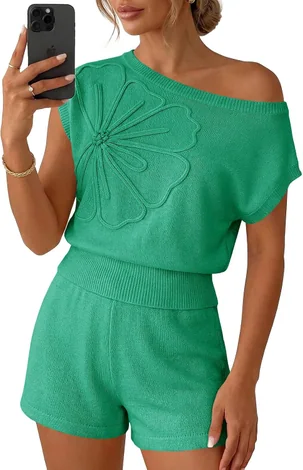 Sets13 styles
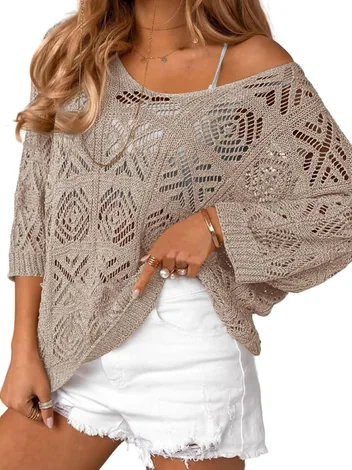 Cover Ups19 styles
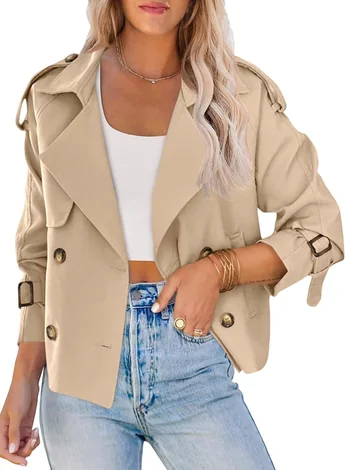 Coats7 styles
 Jeans5 styles
 Swim4 styles
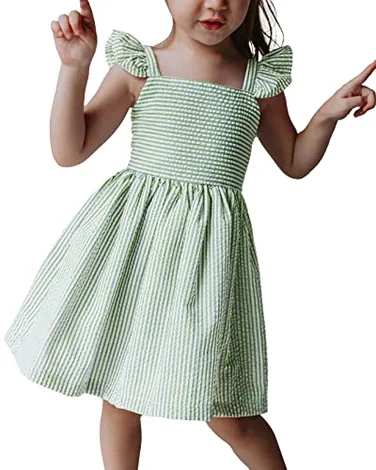 Girls7 styles
For pills, use a fabric shaver or a disposable razor held flat, on a garment laid on a table, moving in one direction. Ten minutes takes a first-winter sweater back to new. Never pull a pill off: the fibre it is made of is still attached to the fabric, and pulling thins the surface.
For a snag, never cut it. Turn the garment inside out, find the pulled loop, and use a blunt needle or a crochet hook to draw the loop through to the inside. Then stretch the fabric gently around the spot with both hands and the slack redistributes. A cut loop, by contrast, is a hole waiting for the next wash.
Prevention is mostly jewellery. Rings, watch clasps and bracelet edges cause most snags in an open stitch, and putting the sweater on before the accessories is a habit worth having.
Open knits, which snag most
See all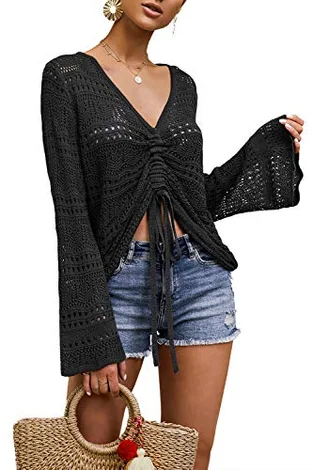
Storing knitwear between seasons
Three rules, and the first is the one everybody breaks.
Fold, never hang. Hanging a knit for a season stretches the shoulders into two points that no amount of washing removes. If drawer space is short, fold the sweater in three and hang the folded parcel over the bar of a hanger rather than hanging it by the shoulders.
Store clean. Moths are drawn to the residue of a body more than to the fibre itself: skin, sweat and food traces. A sweater put away unwashed in April is the one with holes in it in October, and that is true of blends as well as pure wool.
Pullovers$14.99 to $39.99
Cardigans$14.99 to $49.99
Tops & Vests$9.90 to $39.99
Dresses$12.92 to $43.99
Sets$29.98 to $61.99
Cover Ups$9.99 to $39.97
Coats$11.68 to $64.99
Jeans$29.98 to $39.98
Swim$14.99 to $39.99
Girls$9.88 to $23.98
Store breathing. A plastic box traps whatever moisture the knit still holds and turns it into a smell and, eventually, mildew. Cotton bags, a lidded box with a cloth liner, or a drawer are all better. Cedar and lavender help a little. The wash before storage helps a lot.
Keeping colour where it belongs
This range is organised by colour, so a paragraph on keeping it is not a digression. Dye lifts fastest in the first two washes, in hot water, and in a long soak.
The rule is simple: wash a strong colour alone the first time, cold and short. Deep reds, wine and indigo are the ones most likely to give up dye. Blacks and browns lose depth slowly through a season and rarely stain a neighbour.
Lightweight89 pieces
Chunky48 pieces
Midweight1 pieces
Heavyweight1 pieces
Sunlight is the other thief. A knit dried on a line in direct sun fades on the side facing it, unevenly, and that is why drying flat in shade is worth the extra hours. The families in this range and the maker's own names for them are below.
| Colour family | Names on the labels | Styles |
|---|---|---|
| Black | Black | 69 |
| White | White, Creamy-White, Beige White, Cream | 56 |
| Grey | Grey, Dark Gray, Light Grey, Bluish Gray | 18 |
| Beige | Khaki, Apricot, Beige, Light Khaki | 85 |
| Brown | Coffee, Brown, Camel, Dark Brown | 45 |
| Green | Green, Army Green, Grass Green, Light Green | 39 |
| Blue | Blue, Light Blue, Dark Blue, Navy Blue | 34 |
| Pink | Pink, Bright Pink, Rose Red, Fuchsia | 29 |
| Red | Burgundy, Red, Wine Red, Brick Red | 29 |
| Yellow | Yellow, Orange, Goose Yellow | 15 |
If a colour matters enough that you bought the piece for it, the shade guide and the colour pages show what else exists in the same family, which is useful when a favourite finally wears out.
Detergent, softener and the things that do harm
Most knitwear needs less chemistry than people give it. A liquid detergent at half the dose the bottle suggests cleans a sweater that has been worn twice, and the half you did not use is the half that would have stayed in the fibre.
Fabric softener is the one product to skip outright. It works by depositing a thin waxy film on the fibre, and that is the reason towels treated with it stop absorbing. On a brushed knit the film mats the surface. On a ribbed one it dulls the elastic, and on an open stitch it collects in the holes and greys them.
Ribbed and fitted
- the stitch pulls in and follows the body
- recovers its shape after a day of wear
- shows everything under it, which some people want
Chunky and cable
- adds visible width at the shoulder and arm
- holds warmth better than anything else here
- takes a day to dry flat and never goes on a hanger
Powder detergents are harder on knits than liquids, because undissolved grains sit in the loops and abrade the fibre through the cycle. If a powder is what you have, dissolve it in warm water before it meets the garment.
Wool-specific detergents are worth it for the pieces that state a wool blend and unnecessary for the acrylics, which is most of this range. Their real advantage is a neutral pH and no enzymes, and enzymes are what attack protein fibres over a season of washes.
Airing, and how often to wash at all
The gentlest thing you can do to a knit is not wash it. Wool blends and acrylics both hold less odour than a cotton t-shirt, and a sweater worn over a top has barely touched a body at all.
- 1. Measure a knit you already wearChest flat across and shoulder to hem. Those two numbers settle most of the range.
- 2. Read the stitch before the sizeRibbed pulls in and follows the body. Chunky adds width to the shoulders before you wear it.
- 3. Decide how oversized you want itOversized is a cut here, not a size up. Taking a size up on top of it gets you a dress.
The practical rhythm for a knit worn over something else is three or four wearings, with a night on a rack between each. Hanging it in a bathroom after a shower and leaving it overnight removes most of what a nose notices, because the steam relaxes the fibre and takes the odour with it as it dries.
A knit worn against the skin is a different case and needs washing after one or two wearings, especially under the arms where deodorant and fibre meet. That residue is what yellows a pale knit over a season, and it is easier to prevent than to remove.
Spot cleaning is legitimate and underused. A drop of detergent in cool water on a cloth, dabbed rather than rubbed on a stain and rinsed with a second damp cloth, saves a whole cycle. Rubbing a knit stain is how a mark becomes a fuzzy patch.
Chunky knit28 pieces
Crochet27 pieces
Ribbed15 pieces
Cable knit14 pieces
Fuzzy knit5 pieces
Fair Isle4 pieces
Waffle knit1 pieces
Knitwear in a suitcase
Knits pack better than almost anything else and arrive better than almost anything else, provided they are rolled rather than folded. A roll has no crease line. A fold has one, and in a chunky knit that line survives a week.
Ribbed pieces are the ones to pack when space is tight: they compress to nothing and recover as soon as they are unpacked. Chunky knits are the opposite and are best worn on the journey rather than carried.
A creased knit does not need an iron. Hang it in a bathroom with a hot shower running for ten minutes, then lay it flat while it is still slightly damp and pat the crease out. An iron on a knit flattens the stitch permanently, and a steamer held an inch away is the only heat worth using.
Ribbed knits, which travel best
See all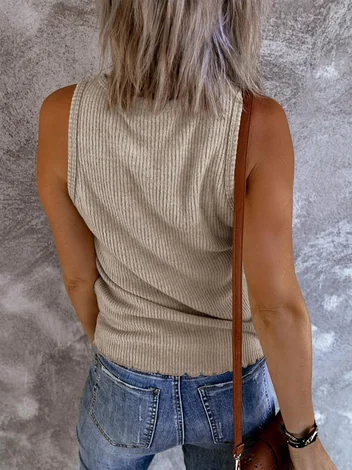

The day something goes wrong
Three accidents account for most ruined knits, and two of them are recoverable if you act the same day.
Colour from another garment is the easiest. Rinse the piece in cold water at once, before it dries, and wash it again alone with a full dose of detergent. Dye that has not dried into the fibre lifts out. Dye that has been through a dryer generally does not.
A grease mark is the second. Do not wet it. Cover the mark with talc or cornflour, leave it an hour to draw the oil out, brush the powder away, then treat what remains with a drop of washing-up liquid worked in with a finger and rinsed with a damp cloth. Water first is what turns a small mark into a large one.
| Neckline | Styles |
|---|---|
| Crew neck | 36 |
| V-neck | 32 |
| Turtleneck | 25 |
| Collared | 10 |
| Square neck | 4 |
| Boat neck | 4 |
| Hooded | 2 |
| Off shoulder | 2 |
Felting is the third and it is the one that does not come back. A wool or wool-blend knit that has been through heat and agitation has fibres locked into each other, not loops out of place. Soaking it in cool water with hair conditioner relaxes the fibre enough to stretch the garment a size, and that is the whole of what is possible. Nothing returns the original stitch.
How long a knit should last, and when to let it go
An acrylic knit worn once a week through a season and cared for as above holds its shape for three or four winters. The failure is rarely dramatic: the cuffs stop springing back, the surface goes matte where the bag rides, and one day it reads as an old sweater rather than a soft one.
Chunky knit$20.69 to $49.99
Crochet$9.99 to $46.98
Ribbed$9.90 to $42.99
Cable knit$19.99 to $43.99
Fuzzy knit$9.99 to $49.99
Fair Isle$22.79 to $38.98
The signs come roughly in order. Cuffs and hem that stay stretched after a wash. A matte, flattened patch at the hip or the elbow. Pills that come back within days of shaving. And a thin patch where light comes through at the underarm.
The first three are cosmetic and worth fixing. The fourth is structural: fabric that has thinned to the point of translucency has lost fibre, and no wash or shave brings it back. That is the moment a sweater becomes a gardening sweater.
Nothing here is written to sell a replacement. The routine above genuinely costs four minutes a week and adds seasons, and a range built on the same shapes in many colours is one where a favourite can be replaced in the same shade when it finally goes.
The four-minute routine
- Turn it inside out and close every zip and button. An open zip saws at whatever it touches for the whole cycle.
- Cold water, short cycle, like with like. No towels, no denim, no velcro.
- Skip the softener. It coats fibre, flattens a brushed surface and does nothing a good detergent has not already done.
- Roll in a towel and press. Thirty seconds, and the drying time halves.
- Lay flat and shape. Square the shoulders, straighten the sleeves, walk away until it is dry.
Pullovers57 styles
Cardigans47 styles
Tops & Vests44 styles
Cover Ups19 styles
Dresses17 styles
Sets13 styles
Coats7 styles
Girls7 styles
Jeans5 styles
Swim4 styles
Do that and a knit from this range lasts several seasons rather than one. Skip the last step alone and it grows an inch a year until it is a different garment.
Our label guide covers what the tag is required to say and what it is forbidden to claim, and the knit guide explains which stitches ask most of this routine. Between the two, most of what a sweater needs from you is on one page.
Cardigans, most rated first
See all
Womens Fall Short Sleeve Cardigans Sweater Oversized Tops
4.3 out of 5 (1,111) $15.26 - $23.96 5 colours
Womens Long Duster Cardigans Button Down Maxi Sweater
4.3 out of 5 (1,101) $37.98 - $37.99 4 colours
Sources we read
| Source | Published by | Read |
|---|---|---|
| 16 CFR Part 423, Care Labeling of Textile Wearing Apparel | Federal Trade Commission | 5 September 2026 |